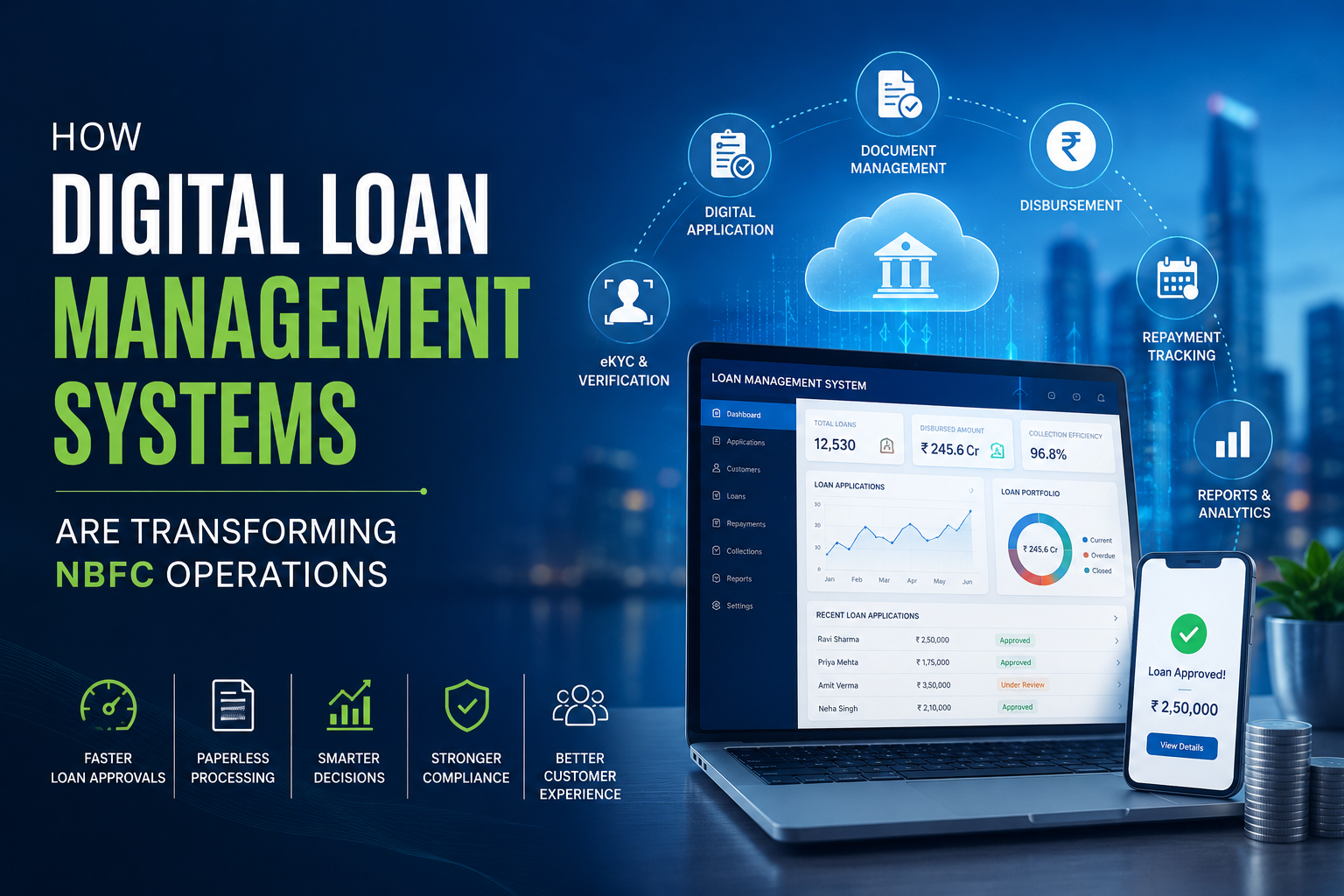
The financial services industry is evolving rapidly, and Non-Banking Financial Companies (NBFCs) are at the center of this transformation. As customer expectations shift toward faster approvals, paperless processing, and seamless digital experiences, traditional loan management methods are no longer sufficient. To remain competitive, NBFCs are increasingly adopting Digital Loan Management Systems (DLMS) to streamline operations, reduce risk, and improve customer satisfaction.
A Digital Loan Management System is more than just software—it is a complete ecosystem that automates and manages the entire loan lifecycle, from application and verification to disbursement, repayment tracking, and recovery management.
In this blog, we explore how digital loan management systems are revolutionizing NBFC operations and shaping the future of lending.
Understanding Digital Loan Management Systems
A Digital Loan Management System is a technology platform designed to automate lending processes and centralize loan operations. It enables NBFCs to manage borrowers, documents, approvals, collections, and compliance through a unified digital interface.
Modern systems integrate with:
- Credit bureaus
- Banking APIs
- eKYC services
- Payment gateways
- CRM platforms
- Accounting software
This integration creates a faster, smarter, and more transparent lending ecosystem.
Why NBFCs Need Digital Transformation
Traditional loan processing involves:
- Manual paperwork
- Physical verification
- Delayed approvals
- Human errors
- High operational costs
These outdated methods slow down business growth and impact customer experience.
Today’s borrowers expect:
- Instant loan approvals
- Mobile accessibility
- Minimal documentation
- Real-time updates
- Digital repayment options
Digital loan management systems help NBFCs meet these expectations efficiently.
Key Ways Digital Loan Management Systems Are Transforming NBFC Operations
1. Faster Loan Processing
One of the biggest advantages of digital lending systems is speed.
Earlier, loan approval could take days or even weeks due to manual verification and paperwork. With automation, NBFCs can:
- Verify customer details instantly
- Perform automated credit checks
- Process applications in real time
- Approve loans within minutes
This significantly improves customer satisfaction and increases loan conversion rates.
2. Paperless Operations
Digital systems eliminate the need for physical paperwork by enabling:
- Online document uploads
- eSignatures
- Digital KYC verification
- Cloud-based storage
Benefits include:
- Reduced operational costs
- Better document security
- Faster retrieval of records
- Environment-friendly operations
Paperless workflows also reduce the chances of document loss and duplication.
3. Improved Customer Experience
Customer experience has become a major differentiator in the financial industry.
Digital loan management systems provide:
- User-friendly customer portals
- Mobile loan applications
- Real-time loan status tracking
- Automated EMI reminders
- Instant support and notifications
Borrowers can apply for loans anytime and from anywhere, making the process convenient and transparent.
4. Better Risk Assessment and Credit Analysis
Modern loan management systems use:
- AI-based scoring
- Data analytics
- Automated risk profiling
- Credit bureau integrations
This allows NBFCs to:
- Identify risky borrowers early
- Reduce loan defaults
- Improve underwriting accuracy
- Make data-driven lending decisions
Advanced analytics also help lenders create customized loan products based on customer behavior.
5. Automation of EMI Collection and Repayment Tracking
Managing repayments manually is time-consuming and error-prone.
Digital systems automate:
- EMI scheduling
- Payment reminders
- Auto-debit processing
- Penalty calculations
- Collection tracking
This improves repayment efficiency and reduces delinquency rates.
Borrowers also benefit from multiple repayment options such as:
- UPI
- Net banking
- Debit cards
- Wallet payments
- Auto-pay mandates
6. Enhanced Compliance and Security
NBFCs must comply with various financial regulations and RBI guidelines.
Digital loan management systems help maintain compliance through:
- Audit trails
- Automated reporting
- Secure customer data storage
- Role-based access control
- Real-time monitoring
Security features such as encryption and multi-factor authentication protect sensitive financial data from cyber threats.
7. Scalability for Business Growth
As NBFCs expand, managing thousands of borrowers manually becomes difficult.
A digital system allows organizations to:
- Handle high loan volumes
- Expand to multiple branches
- Launch new loan products quickly
- Scale operations without increasing manpower significantly
This creates a strong foundation for long-term growth.
8. Real-Time Reporting and Analytics
Decision-making becomes more effective with access to real-time insights.
Loan management dashboards provide:
- Loan portfolio analysis
- Collection performance
- Disbursement trends
- NPA tracking
- Customer behavior analytics
These insights help management make smarter strategic decisions.
Impact on Different Types of NBFCs
Digital loan management systems benefit various lending sectors, including:
Microfinance Institutions
- Faster rural lending
- Simplified borrower onboarding
Vehicle Finance Companies
- Quick asset-based loan approvals
- Automated repayment schedules
Gold Loan Companies
- Digital valuation records
- Faster disbursement
Consumer Lending Platforms
- Instant personal loan approvals
- AI-driven credit scoring
SME Financing Companies
- Faster business loan processing
- Better financial analysis tools
Emerging Technologies Driving the Future of Digital Lending
The future of NBFC operations is being shaped by technologies such as:
Artificial Intelligence (AI)
AI helps in fraud detection, risk analysis, and customer support automation.
Machine Learning
Machine learning models improve loan approval accuracy over time.
Blockchain
Blockchain enhances security and transparency in financial transactions.
Cloud Computing
Cloud-based platforms offer scalability, remote access, and cost efficiency.
API Integrations
Open APIs enable seamless integration with banking, payment, and verification services.
Challenges in Implementing Digital Loan Management Systems
Despite the advantages, NBFCs may face certain challenges during digital transformation:
- Initial implementation costs
- Employee training requirements
- Data migration complexities
- Cybersecurity concerns
- Integration with legacy systems
However, the long-term benefits far outweigh these temporary challenges.
Best Practices for NBFCs Adopting Digital Loan Systems
To successfully implement a digital lending platform, NBFCs should:
- Choose scalable and secure software
- Focus on user-friendly interfaces
- Ensure regulatory compliance
- Invest in cybersecurity
- Train employees effectively
- Use analytics for decision-making
- Continuously upgrade technology
The Future of NBFC Operations Is Digital
Digital transformation is no longer optional for NBFCs—it is essential for survival and growth.
A robust Digital Loan Management System helps NBFCs:
- Increase operational efficiency
- Reduce costs
- Improve customer experience
- Minimize risk
- Scale faster
As competition in the lending sector intensifies, organizations that embrace digital innovation will gain a significant advantage in the market.
The future of lending belongs to smart, automated, customer-centric financial ecosystems—and Digital Loan Management Systems are leading this revolution.
Conclusion
Digital Loan Management Systems are fundamentally changing how NBFCs operate. From automated approvals and paperless workflows to advanced analytics and customer engagement, these platforms are creating faster, safer, and more efficient lending processes.
For NBFCs aiming to grow in the digital era, adopting a modern loan management solution is not just a technology upgrade—it is a strategic business transformation.
Organizations that invest in digital lending today will be better prepared to meet future customer demands, regulatory requirements, and market competition.