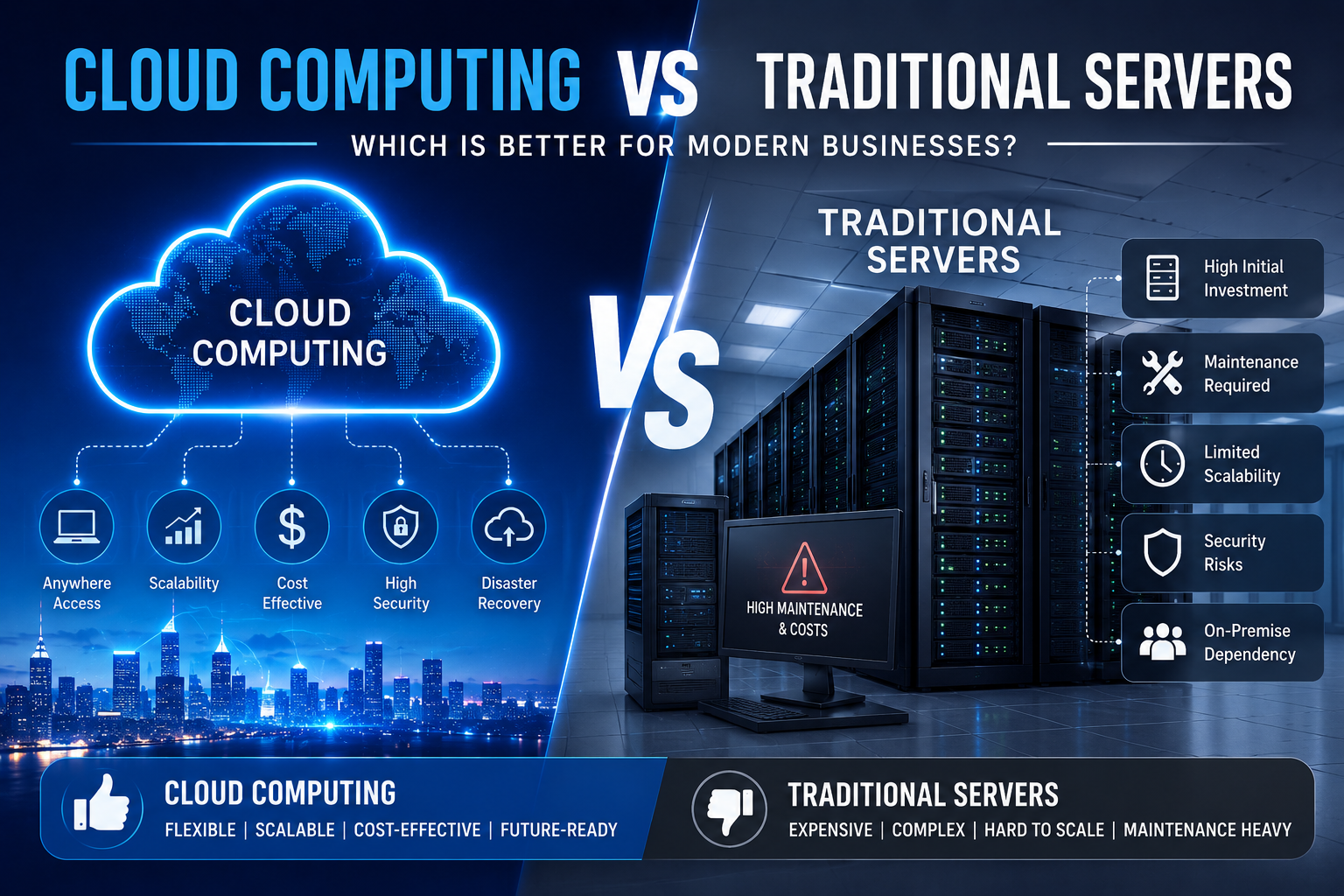
Cloud Computing vs Traditional Servers: Which is Better for Modern Businesses?
Technology infrastructure has become the backbone of every modern business. Whether it’s managing customer data, running applications, storing files, or handling daily operations, companies depend heavily on reliable IT systems.
One of the biggest decisions businesses face in 2026 is choosing between cloud computing and traditional servers.
While traditional on-premise servers dominated the business world for decades, cloud computing has rapidly transformed how organizations operate. Businesses now want systems that are scalable, cost-effective, secure, and flexible.
But the question remains:
Which option is better for modern businesses — cloud computing or traditional servers?
The answer depends on your business goals, operational needs, security requirements, and long-term growth strategy.
In this blog, we’ll compare cloud computing and traditional servers in detail to help businesses make smarter technology decisions in 2026.
What is Cloud Computing?
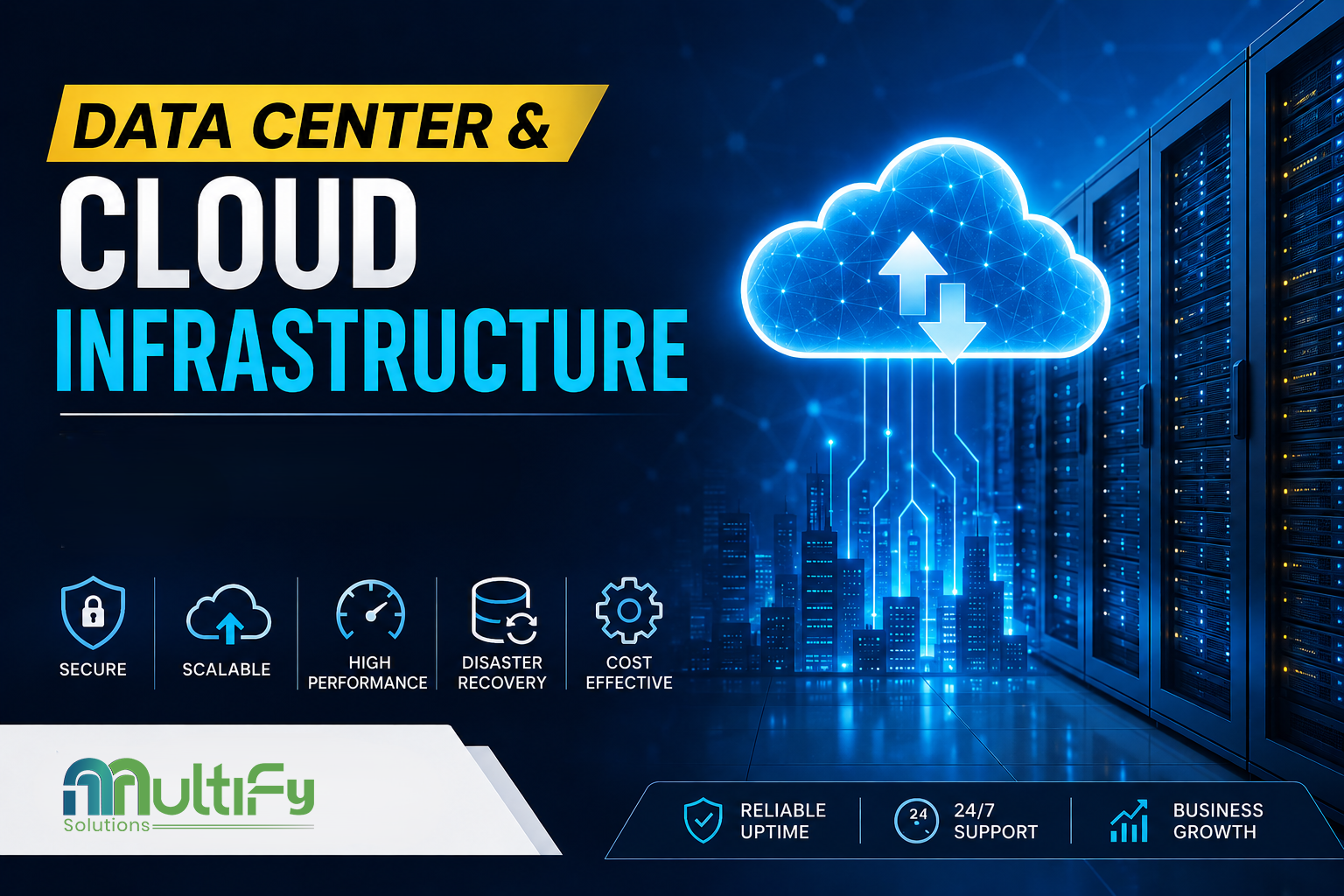
Cloud computing allows businesses to store data, run applications, and access computing resources over the internet instead of maintaining physical servers on-site.
Popular cloud services include:
Cloud storage
Virtual servers
SaaS applications
Backup systems
Remote collaboration tools
Cloud providers manage infrastructure, maintenance, updates, and scalability.
Types of Cloud Computing:
Public Cloud
Private Cloud
Hybrid Cloud
Businesses only pay for the resources they use, making cloud solutions highly flexible and scalable.
What are Traditional Servers?
Traditional servers are physical machines installed and maintained within a company’s own office or data center.
Businesses using traditional infrastructure are responsible for:
Hardware management
Maintenance
Security
Power supply
Cooling systems
Software updates
Backup management
Traditional servers provide complete control over infrastructure but require higher upfront investment and dedicated IT management.
Cloud Computing vs Traditional Servers: Key Comparison
1. Cost Comparison
Cloud Computing
Cloud computing operates on a subscription or pay-as-you-go model.
Businesses avoid large upfront hardware costs because cloud providers handle infrastructure management.
Advantages:
Lower initial investment
Predictable monthly expenses
Reduced maintenance costs
No expensive hardware upgrades
Traditional Servers
Traditional infrastructure requires significant upfront investment.
Businesses must purchase:
Servers
Networking equipment
Backup systems
Cooling systems
Security infrastructure
Disadvantages:
High setup cost
Ongoing maintenance expenses
Hardware replacement costs
Winner:
For most modern businesses, cloud computing is more cost-effective.
2. Scalability and Flexibility
Cloud Computing
One of the biggest advantages of cloud infrastructure is scalability.
Businesses can instantly:
Increase storage
Add computing power
Expand resources
Support remote teams
Cloud systems can adapt quickly to changing business demands.
Traditional Servers
Scaling traditional infrastructure is slower and more expensive.
Businesses may need to:
Purchase new hardware
Upgrade networking systems
Expand physical infrastructure
This process can take weeks or months.
Winner:
Cloud computing offers significantly better scalability and flexibility.
3. Security Comparison
Security is one of the biggest concerns when choosing infrastructure.
Cloud Computing Security
Modern cloud providers invest heavily in:
Data encryption
AI-powered monitoring
Threat detection
Disaster recovery
Compliance certifications
However, cloud environments can still face:
Misconfiguration risks
Third-party vulnerabilities
Internet-based attacks
Traditional Server Security
Traditional servers provide:
Full infrastructure control
Internal security management
Customized protection systems
But security quality depends entirely on the company’s IT team.
Smaller businesses often struggle to maintain enterprise-level security internally.
Winner:
Large cloud providers often offer stronger security than small internal IT teams.
4. Performance and Speed
Traditional Servers
Traditional servers can offer extremely fast local performance because data is processed internally without relying on internet connections.
This is useful for:
Large enterprises
Manufacturing systems
Real-time processing environments
Cloud Computing
Cloud performance depends on:
Internet speed
Provider infrastructure
Geographic server locations
Modern cloud systems are highly optimized, but internet dependency can still impact performance.
Winner:
Traditional servers may offer better local performance for specialized use cases.
5. Maintenance and IT Management
Cloud Computing
Cloud providers manage:
Software updates
Security patches
Hardware maintenance
Backup systems
Infrastructure monitoring
This reduces the burden on internal IT teams.
Traditional Servers
Businesses must handle everything manually, including:
Repairs
Monitoring
Hardware replacement
Security updates
Backup management
This requires skilled IT professionals and ongoing maintenance budgets.
Winner:
Cloud computing is easier to manage and maintain.
6. Remote Accessibility
Cloud Computing
Cloud infrastructure supports remote work environments perfectly.
Employees can access systems securely from:
Offices
Homes
Mobile devices
Different geographic locations
This flexibility has become essential in modern business operations.
Traditional Servers
Remote access setup for traditional infrastructure can be more complicated and expensive.
Winner:
Cloud computing is far superior for remote accessibility.
7. Disaster Recovery and Backup
Cloud Computing
Cloud providers offer:
Automated backups
Disaster recovery systems
Redundant data storage
Fast recovery options
Data is often replicated across multiple locations.
Traditional Servers
Businesses using traditional servers must build their own backup and disaster recovery systems.
This increases:
Cost
Complexity
Risk
Winner:
Cloud computing provides stronger disaster recovery capabilities.
8. Compliance and Data Control
Traditional Servers
Some industries require complete data control due to:
Government regulations
Compliance requirements
Sensitive data handling
Traditional infrastructure allows businesses to maintain full control over data storage and access.
Cloud Computing
Cloud providers support many compliance standards, but some organizations still prefer internal control for highly sensitive operations.
Winner:
Traditional servers may be better for highly regulated industries.
Pros and Cons Summary
Cloud Computing Advantages
Lower upfront costs
Better scalability
Easier maintenance
Strong disaster recovery
Remote accessibility
Faster deployment
Cloud Computing Disadvantages
Internet dependency
Less infrastructure control
Potential vendor lock-in
Traditional Server Advantages
Full control
Local performance optimization
Better for sensitive compliance environments
Traditional Server Disadvantages
High setup cost
Complex maintenance
Limited scalability
Higher operational expenses
Which Option is Better for Modern Businesses?
For most modern businesses in 2026, cloud computing is the better choice.
Why?
Because businesses today need:
Flexibility
Scalability
Remote accessibility
Faster deployment
Cost efficiency
Strong cybersecurity support
Cloud infrastructure enables companies to grow faster without massive hardware investments.
However, traditional servers still make sense for:
Large enterprises
Highly regulated industries
Specialized processing environments
Businesses requiring full infrastructure control
Hybrid Cloud: The Best of Both Worlds
Many companies are now adopting hybrid cloud strategies.
Hybrid infrastructure combines:
Cloud services
Traditional servers
This allows businesses to:
Keep sensitive data on-premise
Use cloud scalability for operations
Improve disaster recovery
Optimize costs
Hybrid models are becoming increasingly popular in industries like banking, healthcare, and enterprise IT.
Future of Business Infrastructure
The future is clearly shifting toward cloud-first infrastructure.
Emerging trends include:
AI-powered cloud management
Edge computing
Multi-cloud environments
Serverless computing
Cloud-native applications
Businesses that continue relying entirely on outdated infrastructure may struggle to compete in the digital economy.
Modern organizations need infrastructure that supports innovation, automation, and rapid scalability.
Final Thoughts
Choosing between cloud computing and traditional servers is not just a technical decision — it is a strategic business decision.
Cloud computing offers:
Agility
Scalability
Cost savings
Easier management
Better remote accessibility
Traditional servers offer:
Full control
Customization
Specialized performance
For most businesses in 2026, cloud computing provides the flexibility and efficiency needed to stay competitive in a rapidly evolving digital world.
The smartest companies are investing in scalable, secure, and future-ready infrastructure today to support tomorrow’s growth.
Conclusion
Modern businesses require infrastructure that is secure, scalable, and adaptable.
While traditional servers still have value in specific industries, cloud computing has become the preferred choice for organizations focused on innovation, efficiency, and long-term growth.
Businesses that embrace modern cloud infrastructure will be better positioned to compete, scale operations, and meet the demands of the digital future.
External Source:
https://aws.amazon.com/what-is-cloud-computing/