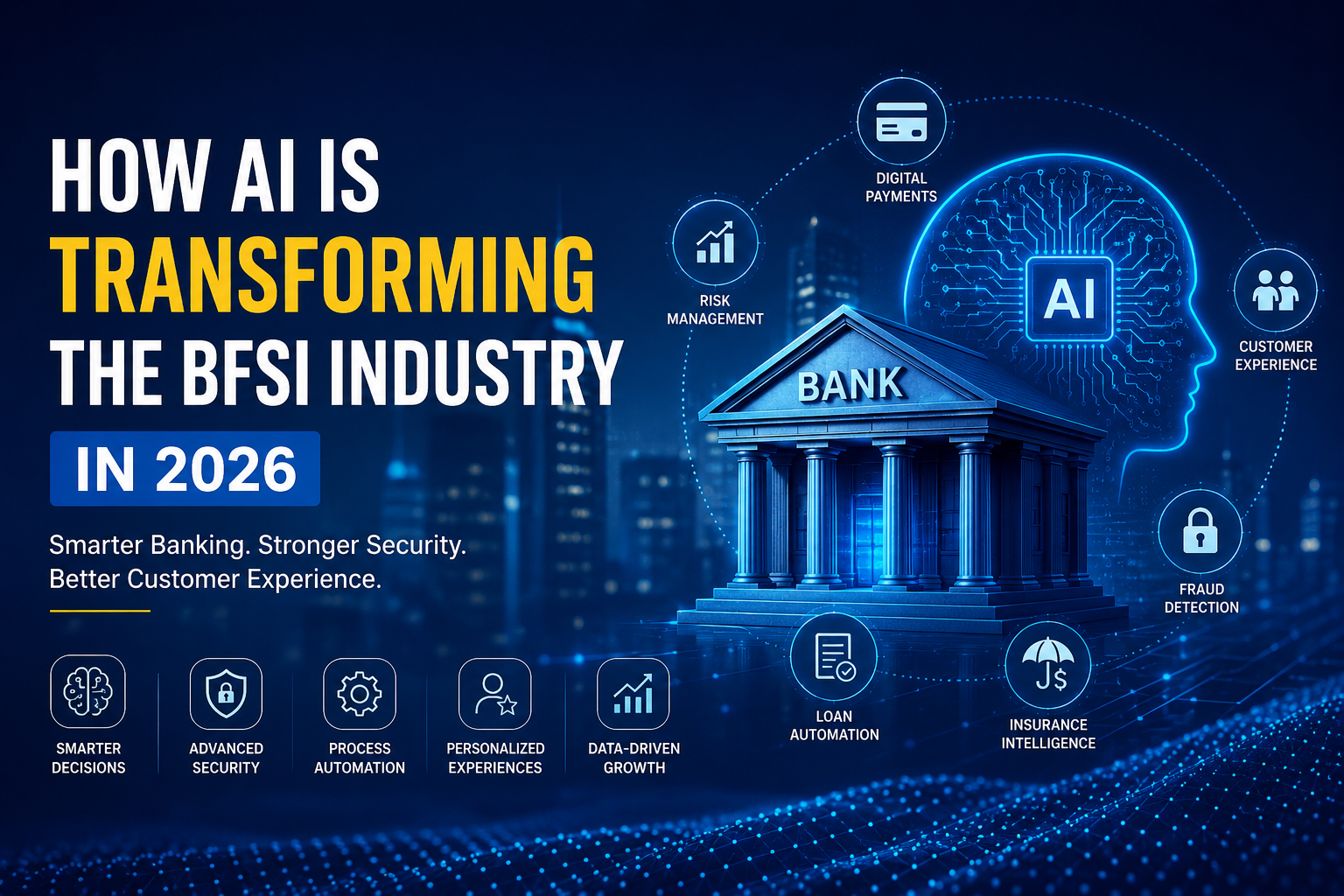
How AI is Transforming the BFSI Industry in 2026
The Banking, Financial Services, and Insurance (BFSI) industry is undergoing one of the biggest digital transformations in history. In 2026, Artificial Intelligence (AI) is no longer a futuristic concept — it has become a core business necessity.
From fraud detection and automated loan approvals to personalized banking experiences and intelligent customer support, AI is changing how financial institutions operate. Companies that fail to adopt AI-driven systems are already falling behind competitors that offer faster, smarter, and more secure services.
In this blog, we’ll explore how AI is reshaping the BFSI industry in 2026 and why businesses must adapt quickly to stay competitive.
Why AI is Becoming Essential in BFSI
The BFSI sector handles massive amounts of customer data, financial transactions, and operational processes every single day. Managing all this manually is slow, expensive, and highly prone to human error.
AI solves these problems by enabling:
Real-time decision-making
Automated workflows
Advanced fraud detection
Personalized customer experiences
Faster loan processing
Predictive financial analytics
Financial institutions are now investing heavily in AI-powered platforms because customers expect instant services, secure transactions, and seamless digital experiences.
1. AI-Powered Fraud Detection is Smarter Than Ever
Fraud has become more sophisticated in recent years. Traditional security systems are no longer enough to detect modern cyber threats.
AI-based fraud detection systems analyze transaction behavior in real time and instantly identify suspicious activities. Unlike older rule-based systems, AI continuously learns from patterns and improves its accuracy over time.
Benefits of AI Fraud Detection:
Real-time monitoring
Reduced false alerts
Faster fraud prevention
Better customer trust
Improved compliance
For example, if a customer suddenly makes an unusual international transaction, AI systems can instantly flag or block the activity before major damage occurs.
This level of intelligent monitoring is becoming critical for banks, NBFCs, and insurance providers in 2026.
2. AI is Revolutionizing Digital Lending
Loan approval processes used to take days or even weeks. In 2026, AI-driven lending platforms can evaluate applicants within minutes.
AI analyzes:
Credit history
Income patterns
Spending behavior
Risk profiles
Digital footprints
This helps lenders make faster and more accurate decisions.
Key Advantages:
Faster loan approvals
Lower operational costs
Reduced default risks
Better customer experience
Automated underwriting
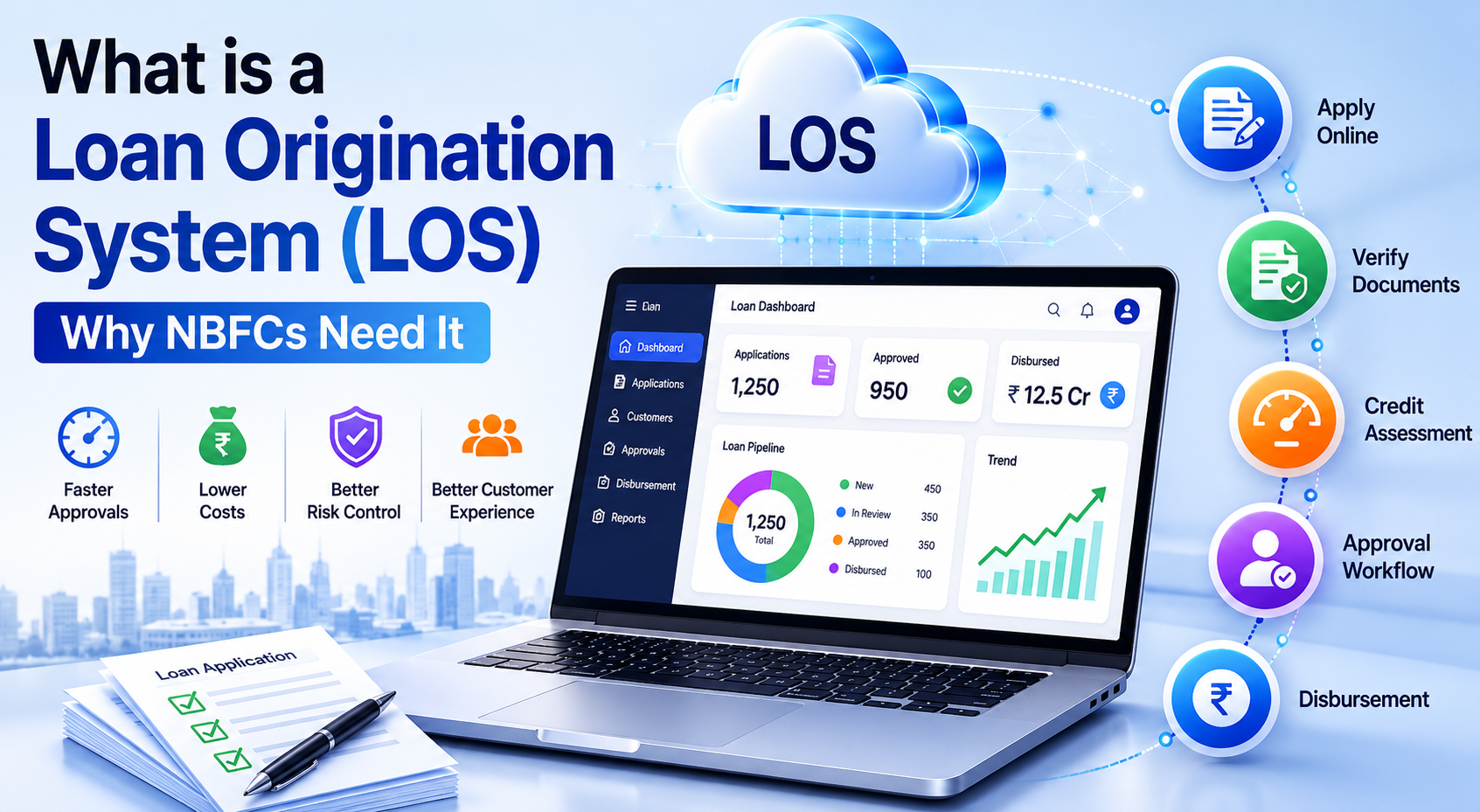
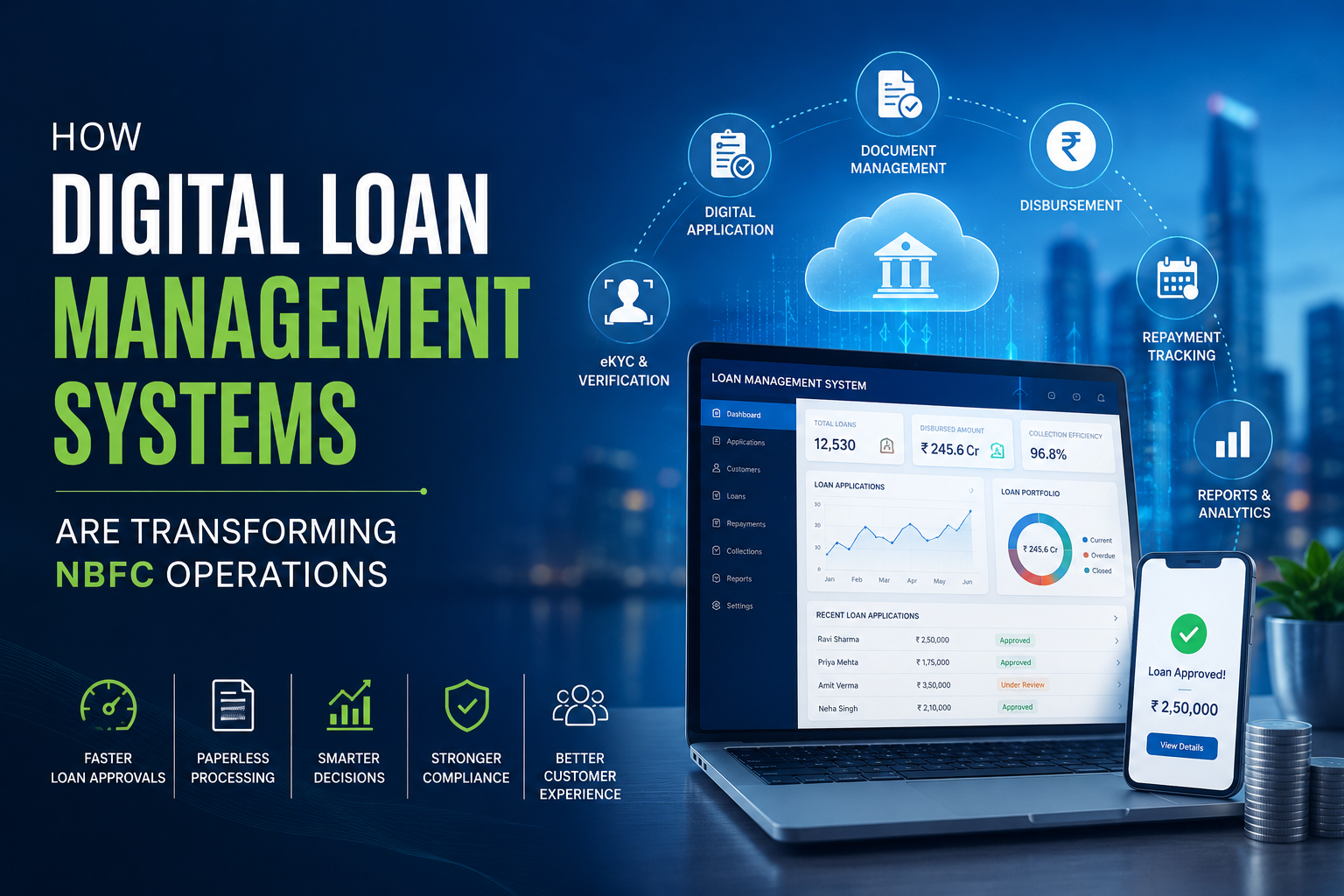
Modern Loan Origination Systems (LOS) powered by AI are helping financial institutions automate the entire lending lifecycle.
Businesses using intelligent lending platforms are seeing massive improvements in efficiency and customer acquisition.
3. Personalized Banking Experiences Through AI
Customers no longer want generic banking services. They expect personalized recommendations, intelligent financial insights, and customized support.
AI helps financial institutions deliver hyper-personalized experiences by analyzing customer behavior and preferences.
Examples:
Personalized investment suggestions
Smart savings recommendations
Customized insurance plans
AI-driven financial planning
Personalized credit card offers
This improves customer engagement and increases long-term loyalty.
Banks that provide personalized experiences are outperforming traditional institutions that still rely on outdated systems.
4. AI Chatbots are Replacing Traditional Customer Support
Customer support is one of the biggest operational expenses in BFSI organizations. AI chatbots are now reducing support costs while improving response speed.
Modern AI-powered virtual assistants can:
Handle customer queries instantly
Provide 24/7 support
Process requests automatically
Assist with account management
Resolve basic issues without human agents
In 2026, conversational AI has become incredibly advanced. Many customers cannot even differentiate between human agents and AI assistants.
Benefits:
Faster response times
Lower operational costs
Improved customer satisfaction
Scalable support systems
This is especially useful for banks handling millions of customer interactions daily.
5. Predictive Analytics is Improving Financial Decision-Making
AI-powered predictive analytics is helping BFSI companies make smarter business decisions.
By analyzing historical and real-time data, AI can predict:
Market trends
Credit risks
Customer behavior
Investment opportunities
Insurance claim probabilities
This allows organizations to reduce uncertainty and improve strategic planning.
Real-World Impact:
Better investment management
Improved risk assessment
Enhanced profitability
Smarter financial forecasting
Predictive AI is becoming a competitive advantage for financial institutions looking to optimize performance.
6. AI is Strengthening Cybersecurity in BFSI
Cyberattacks targeting financial institutions are increasing rapidly. AI-driven cybersecurity systems are helping businesses stay protected against advanced threats.
AI security platforms can:
Detect unusual network behavior
Prevent phishing attacks
Monitor system vulnerabilities
Identify malware patterns
Respond to threats automatically
Unlike manual monitoring systems, AI can process millions of security events instantly.
This is becoming essential because financial institutions are prime targets for hackers and data breaches.
7. Automation is Reducing Operational Costs
One of the biggest reasons companies are adopting AI is cost reduction.
AI-powered automation is eliminating repetitive manual tasks such as:
Data entry
Document verification
Claims processing
Compliance checks
Report generation
This allows employees to focus on higher-value strategic work instead of repetitive administrative tasks.
Business Benefits:
Increased productivity
Lower operational expenses
Faster processing times
Improved accuracy
Better scalability
Financial organizations using AI automation are becoming significantly more efficient than competitors relying on traditional workflows.
Challenges of AI Adoption in BFSI
Although AI offers huge benefits, implementing it correctly is not easy.
Common Challenges:
Data privacy concerns
High implementation costs
Regulatory compliance issues
Lack of AI expertise
Integration with legacy systems
Businesses must choose the right technology partners and build scalable digital infrastructure to maximize AI benefits.
Ignoring these challenges can lead to security risks and failed digital transformation projects.
Future of AI in BFSI
The future of BFSI will be deeply connected with AI-driven innovation.
Emerging technologies expected to grow rapidly include:
Generative AI in banking
AI-powered financial advisors
Voice banking
Intelligent underwriting
Autonomous financial operations
By 2030, most financial processes will likely become heavily AI-dependent.
Companies investing in AI today will dominate tomorrow’s financial ecosystem.
Final Thoughts
AI is no longer optional in the BFSI industry. In 2026, it has become the foundation of modern banking, lending, insurance, and financial services.
Organizations that embrace AI are achieving:
Faster operations
Better customer experiences
Stronger cybersecurity
Improved profitability
Smarter decision-making
Meanwhile, businesses that resist digital transformation risk becoming obsolete.
For BFSI companies looking to remain competitive, scalable AI solutions are now a business necessity — not just a technology upgrade.
Conclusion
The BFSI industry is entering a new era powered by Artificial Intelligence. From fraud prevention and customer service to lending automation and predictive analytics, AI is driving unprecedented innovation across the financial sector.
Businesses that adopt AI strategically will gain a significant competitive edge in the coming years.
If your organization is planning digital transformation, now is the right time to invest in intelligent AI-driven solutions that can future-proof your operations and accelerate growth.
External Source:
https://www.ibm.com/topics/artificial-intelligence-banking