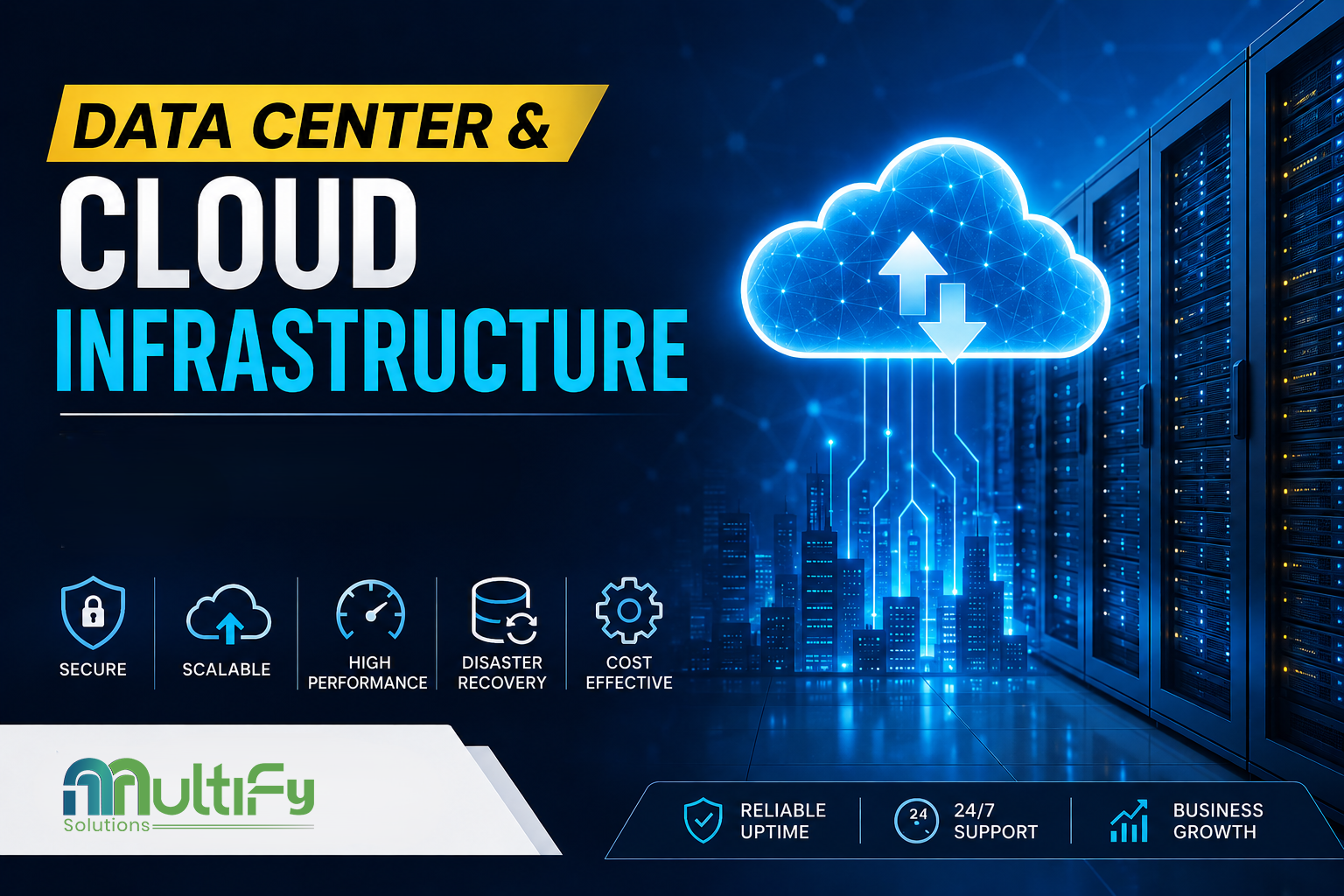
Data Center & Cloud Infrastructure: The Backbone of Modern Business Growth
In today’s digital world, businesses no longer survive on traditional systems alone. Speed, security, scalability, and uninterrupted access to data have become critical for every organization. This is where Data Center & Cloud Infrastructure plays a major role.
Whether it is a startup, NBFC, enterprise, healthcare company, or e-commerce platform, modern businesses need powerful infrastructure to manage operations efficiently. Companies that still rely on outdated systems are already falling behind competitors using cloud-powered environments and enterprise-grade data centers.
The reality is simple: Businesses are no longer competing only on products. They are competing on technology speed, uptime, security, and digital experience.

What is Data Center & Cloud Infrastructure?
A Data Center is a secure facility that stores servers, networking systems, databases, applications, and IT resources. It provides businesses with reliable computing power, storage, backup systems, and high-speed connectivity.
On the other hand, Cloud Infrastructure allows businesses to access computing resources over the internet instead of maintaining expensive physical hardware internally.
Together, Data Center & Cloud Infrastructure create a flexible and scalable ecosystem where businesses can:
- Store critical data securely
- Run enterprise applications smoothly
- Scale operations quickly
- Protect systems from cyber threats
- Enable remote work environments
- Maintain business continuity
Why Businesses Are Rapidly Moving to Cloud Infrastructure
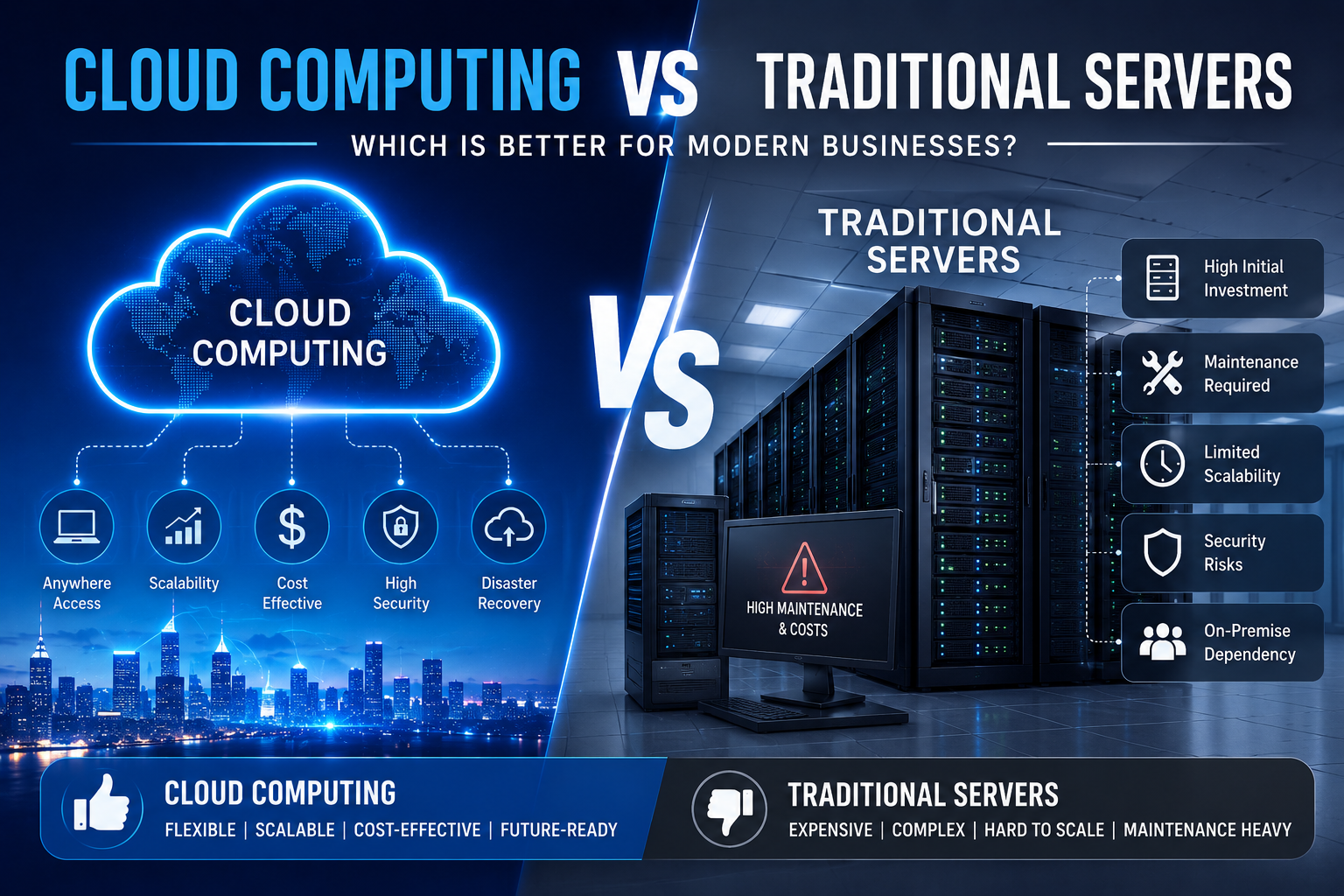
Traditional IT systems are expensive, slow, and difficult to scale. Businesses today need infrastructure that grows with their operations. Cloud infrastructure solves this problem.
Instead of purchasing large amounts of hardware, companies can now use cloud services on demand. This reduces operational costs while improving flexibility and performance.
Key Benefits of Cloud Infrastructure
- Scalability: Increase or decrease resources instantly based on business needs.
- Cost Efficiency: Pay only for the resources you use.
- Remote Accessibility: Access applications and data from anywhere.
- Faster Deployment: Launch services quickly without infrastructure delays.
- Disaster Recovery: Protect business operations during system failures.
- High Availability: Reduce downtime and improve customer experience.
7 Powerful Ways Data Center & Cloud Infrastructure Transform Businesses
1. Improved Business Continuity
Downtime can destroy revenue and customer trust. Modern data centers provide backup systems, redundancy, and disaster recovery solutions that ensure businesses stay operational even during unexpected failures.
Cloud infrastructure further improves continuity by allowing automatic backups and failover systems.
2. Better Cyber Security Protection
Cyber attacks are increasing every year. Businesses handling sensitive customer data must invest in secure infrastructure.
Enterprise-grade data centers include:
- 24/7 monitoring
- Firewall protection
- Intrusion detection systems
- Encrypted data storage
- Multi-layer authentication
Cloud security solutions also provide advanced threat detection and automated security updates.
3. Faster Application Performance
Customers expect websites and applications to load instantly. Slow systems reduce user experience and affect business growth.
Modern cloud infrastructure uses optimized servers, SSD storage, and intelligent load balancing to improve performance dramatically.
4. Easy Scalability for Growing Businesses
One major problem with traditional infrastructure is scalability. Businesses often purchase expensive hardware they may not fully use.
Cloud infrastructure eliminates this issue by allowing organizations to scale resources instantly based on traffic and operational demands.
5. Support for Remote & Hybrid Work
The modern workforce is no longer limited to physical offices. Cloud infrastructure enables secure remote access to business applications, files, and communication systems.
This improves flexibility, productivity, and collaboration across teams.
6. Data Backup & Disaster Recovery
Data loss can severely damage businesses. A reliable data center and cloud strategy ensures:
- Automatic backups
- Real-time replication
- Quick disaster recovery
- Reduced operational risk
7. Reduced IT Management Burden
Managing physical servers internally requires skilled staff and high maintenance costs. Cloud providers handle updates, monitoring, and infrastructure management, allowing businesses to focus on growth instead of technical maintenance.
Types of Cloud Infrastructure
1. Public Cloud
Services are shared across multiple businesses using providers like AWS, Microsoft Azure, and Google Cloud.
2. Private Cloud
Dedicated cloud environment designed for a single organization with enhanced security and customization.
3. Hybrid Cloud
Combination of public and private cloud systems for maximum flexibility and control.
Why Tier III Data Centers Matter
Tier III data centers provide high uptime reliability and redundancy. For enterprises handling critical operations, downtime is not an option.
Tier III facilities offer:
- 99.982% uptime
- Redundant power systems
- Advanced cooling infrastructure
- High security standards
- 24/7 monitoring support
This level of reliability is essential for banking, healthcare, fintech, e-commerce, and enterprise operations.
Industries Benefiting from Data Center & Cloud Infrastructure
- Banking & Financial Services
- Healthcare
- E-commerce
- Education
- Government Organizations
- Manufacturing
- IT & Software Companies
- Media & Entertainment
How to Choose the Right Infrastructure Partner
Many companies make the mistake of selecting infrastructure providers based only on pricing. That approach usually creates long-term technical problems.
Instead, businesses should evaluate:
- Security standards
- Uptime guarantee
- Scalability options
- Technical support availability
- Disaster recovery systems
- Compliance certifications
- Future growth capabilities
Choosing the right technology partner directly affects operational stability and business growth.
The Future of Data Center & Cloud Infrastructure
The future of infrastructure is being shaped by:
- Artificial Intelligence
- Automation
- Edge Computing
- Hybrid Cloud Systems
- Green Data Centers
- Advanced Cyber Security
Businesses that modernize their infrastructure early will gain a massive competitive advantage over companies still using outdated systems.
Final Thoughts
Modern businesses cannot scale efficiently without reliable technology infrastructure. Data Center & Cloud Infrastructure has become the foundation of digital transformation, operational efficiency, and long-term business growth.
From security and scalability to performance and disaster recovery, cloud-powered infrastructure helps organizations stay competitive in an increasingly digital economy.
Companies investing in modern infrastructure today are preparing themselves for faster growth, stronger security, and better customer experiences tomorrow.
Read more about enterprise infrastructure solutions at Multify Solutions.
Source: AWS Cloud Computing Guide